



The knowledge and control of bronze gave some people who lived between 2200BC and 700BC enormous wealth and power. Their lives and deeds were immortalised by their burial mounds, known as barrows and cairns, which still litter our landscape today. Incredibly though, finding the places where bronze age people lived has proven to be very difficult.
In South Wales, for example, only a handful of settlements are known about. Typically, all that remain are the ruins of a flimsy roundhouse or two. We have little else to tell us about the lives of the inhabitants. Maybe that’s because bronze age people had mobile lifestyles, moving around the landscape with their herds from season to season but never staying in the same place too long. That’s one argument, anyway.
However, in the summer of 2022, a collaborative, community-led archaeological excavation on the outskirts of Cardiff began to challenge those assumptions.
The Caerau hillfort
It’s hard to imagine how our prehistoric ancestors would have reacted when they first began to make and use metal. They took rocks that sparkled with green and silver, and crushed and heated them until they became liquid. They then poured this elixir into moulds before cooling and breaking them open to reveal the dark golden-coloured metallic objects inside. It must have appeared like magic.
Since 2011, our CAER Heritage Project has mobilised people in the Cardiff suburbs of Caerau and Ely to imagine and explore such history and archaeology. Both areas face challenges such as high unemployment and poor educational attainment. But they are also home to a host of extremely friendly and talented people, not to mention some outstanding heritage.
Until recently, much of our archaeological investigation had focused on the Caerau hillfort. This is the largest and most impressive iron age (700BC) hillfort in the region and is almost entirely surrounded by houses. We discovered that the hilltop was used as a gathering place during the stone age (3600BC), before the hillfort was built around 600BC.
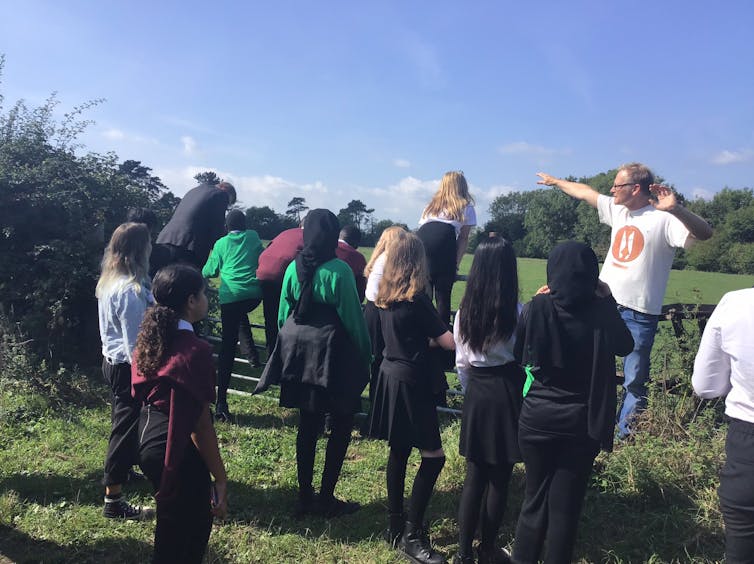
Over the last couple of years, we have taken archaeology into the housing estates themselves. During the Covid lockdowns between 2020 and 2021, local residents did “mini-digs” in their gardens. Many discovered prehistoric items such as flints and pottery shards.
Finding previous residents
The best chance of finding the places where prehistoric people lived was in a large area of open ground known as Trelai Park, which is around 1,500 metres east of the Caerau hillfort. The park is today used for sport but in its centre are the remains of a Roman villa, which was excavated in 1922 by the renowned archaeologist, Sir Mortimer Wheeler.
A century later, in April 2022, we completed a “geophysical survey” of the park with local school children and adults. Geophysics is a process using a machine called a magnetometer, which allows archaeologists to “see” under the ground without removing the soil and helps us work out where to dig.
We had expected to find more Roman remains, but around 200 metres south of the villa, we discovered an intriguing square enclosure. Digging beneath one of the football pitches last summer, we revealed the remains of a substantial roundhouse. It was made from timber and thatch which had long since rotted away, but the big post holes that held up its circular wall still survived. A radiocarbon date from a piece of burnt wood indicated it was built around 1500BC, which is the middle of the bronze age. That makes it the oldest known house in the Welsh capital.
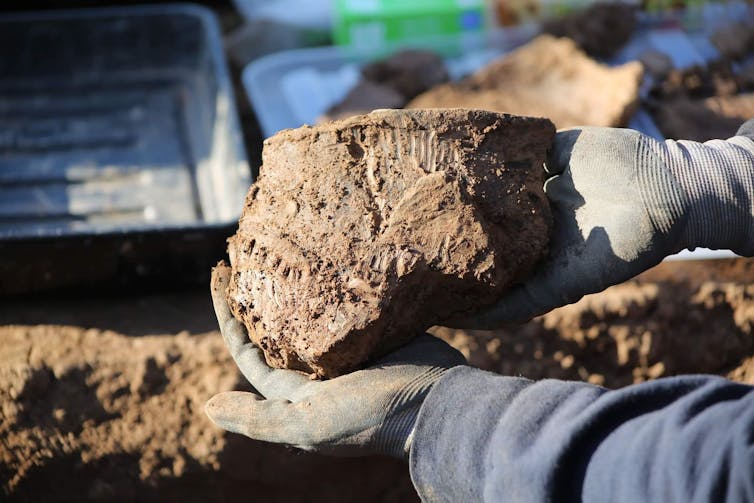
Even more amazingly, the floor surface that its occupants had walked, worked, and slept on was still there. Trampled into this floor were finds of flint and stone tools, pottery, and burnt bones which gave us a glimpse into bronze age daily life. Surrounding the roundhouse was a large ditch and bank which was the square enclosure we had discovered through geophysics. Placed into the ditch was an extraordinary complete pot, beautifully decorated in bronze age “Trevisker” style. This type of decoration is common in Devon and Cornwall but this pot was made from local Welsh clay. Perhaps it was a copy made by bronze age travellers 3,500 years ago.
Community passion
No other bronze age settlement like this has been discovered in south Wales and we have plenty of questions as a result, which, so far, remain unanswered. One thing we do know is that none of these discoveries could have been made without the passion and participation of local people.
Almost 400 children were involved in the dig as well as hundreds of volunteers, who gave more than 3,000 hours of their time to help out. What sets CAER apart from many other community archaeology projects is that the people have remained involved in the work way beyond just the excavation process. Children and adults have sieved, cleaned, and analysed our finds and continue to research the bronze age in their spare time.
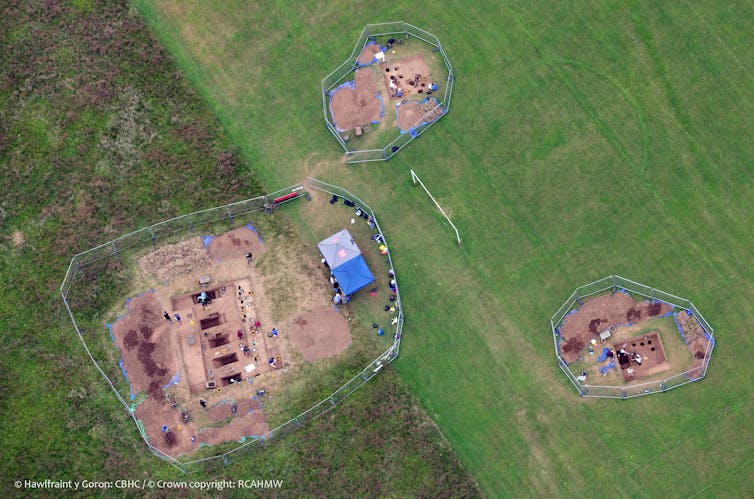
Buoyed by such enthusiasm, we will be back digging in Trelai Park this summer, where once again we will be working alongside our passionate citizen archaeologist colleagues. We’re excited at the prospect of what we may uncover.
This article is republished from The Conversation under a Creative Commons license. Read the original article.



